How Much Do Solar Panels Cost in Nigeria in 2026? A Complete Breakdown
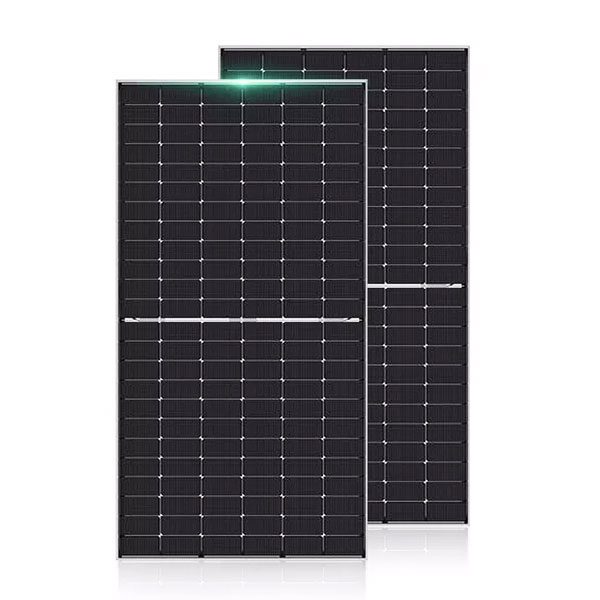
A small 100W panel can cost tens of thousands of naira, while modern 550W, 600W and 650W panels can cost well over ₦100,000 each. Current 2026 market listings show that prices can also vary considerably between sellers, so it is better to work with a realistic price range than one fixed figure.
If you are planning to buy solar in Nigeria this year, one of the first questions you will probably ask is: how much is a solar panel in Nigeria in 2026?
The answer depends on the size, brand, technology and where you buy it.
A small 100W panel can cost tens of thousands of naira, while modern 550W, 600W and 650W panels can cost well over ₦100,000 each. Current 2026 market listings show that prices can also vary considerably between sellers, so it is better to work with a realistic price range than one fixed figure.
And there is something important to understand: the price of the solar panel is not the price of going solar.
You still need an inverter, battery, cables, protection equipment, mounting and installation.
So, let's break everything down.
Solar Panel Prices in Nigeria in 2026
Here is a practical price guide for the common panel sizes you will find in the Nigerian market.
| Solar Panel | Estimated 2026 Price |
|---|---|
| 50W | ₦25,000 – ₦45,000 |
| 100W | ₦35,000 – ₦60,000 |
| 150W | ₦45,000 – ₦75,000 |
| 200W | ₦55,000 – ₦110,000 |
| 250W | ₦65,000 – ₦130,000 |
| 300W | ₦80,000 – ₦155,000 |
| 350W | ₦90,000 – ₦145,000 |
| 400W | ₦95,000 – ₦185,000 |
| 450W | ₦105,000 – ₦210,000 |
| 500W | ₦120,000 – ₦240,000 |
| 550W | ₦115,000 – ₦265,000 |
| 600W | ₦140,000 – ₦295,000 |
| 650W+ | ₦155,000 – ₦250,000+ |
These are indicative market ranges, not official fixed prices. For example, some current Nigerian listings put 550W panels around ₦115,000–₦165,000, while other sellers list considerably higher prices.
That difference is normal. Brand, panel technology, stock availability, location and exchange-rate movements can all affect what you are quoted.
How Much Is a 550W Solar Panel in Nigeria?
The 550W panel has become one of the common choices for modern residential solar installations.
In 2026, you should generally budget around ₦115,000 to ₦200,000+ for a 550W panel, although cheaper and more expensive listings exist.
Brands such as Jinko Solar, LONGi, Canadian Solar and Trina Solar are commonly seen in this category.
A 550W Jinko or LONGi panel may not have the same price as an unknown-brand 550W panel. And that is why simply asking, "How much is 550W?" is not enough.
You should also ask:
- What is the exact model?
- Is it monocrystalline?
- Is it N-Type/TOPCon?
- What is its efficiency?
- Is it genuine?
- What warranty comes with it?
- What is the price per watt?
The last question is particularly useful when comparing different panel sizes.
How Much Is a 600W or 650W Solar Panel?
If you have limited roof space, larger panels can be attractive because you can get more generating capacity from fewer panels.
A 600W panel can cost roughly ₦140,000–₦295,000, while a 650W+ panel can fall around ₦155,000–₦250,000 or more, depending on the brand and model.
Popular brands in this category include:
- Jinko Solar
- LONGi
- Trina Solar
- Canadian Solar
- JA Solar
Some current September 2026 Nigerian listings show individual 600W and 650W panels selling below some of the broader market ranges, which shows just how much supplier and model differences matter.
So don't walk into a solar shop and say, "Give me 650W panels." Get the exact model and compare the price per watt.
Popular Solar Panel Brands in Nigeria
If you are shopping for solar in Nigeria, you will likely come across several names repeatedly.
Jinko Solar
Jinko is one of the brands frequently stocked by Nigerian solar dealers, particularly in the higher-wattage panel market.
550W and 600W+ Jinko panels are commonly used for residential and commercial installations.
LONGi Solar
LONGi is another major international manufacturer. Its monocrystalline panels are widely used in solar projects and are available through Nigerian suppliers.
Canadian Solar
Canadian Solar is another established manufacturer with panels available in different wattages and technologies.
Trina Solar
Trina is particularly relevant if you are looking at high-output panels, including 600W and 650W-class options.
JA Solar
JA Solar is another major manufacturer you may encounter when comparing Tier-1 solar panels.
Felicity Solar
Felicity Solar is also widely available in Nigeria and is often considered when buyers are looking at more budget-conscious solar setups.
The important thing is not to buy a panel simply because the name sounds familiar. Check the exact model, specifications and authenticity.
Monocrystalline vs Polycrystalline: Which One?
If you are buying solar in 2026, you will hear the words monocrystalline and polycrystalline quite often.
For most new installations, monocrystalline panels are now the more common choice. They generally offer higher efficiency and can produce more power from a similar amount of roof space.
Polycrystalline panels are still available, and they can be cheaper in some cases, but newer residential installations increasingly use monocrystalline technology.
You will also see newer N-Type and TOPCon panels. These are designed to deliver improved efficiency and performance compared with older panel technologies.
For a serious home installation, don't just ask for "solar panel." Ask what technology and efficiency rating you are getting.
But How Much Does a Complete Solar System Cost?
This is where many people get confused.
You can buy four solar panels for a few hundred thousand naira and still not have electricity in your house.
Why?
Because the panels only generate electricity. You need the rest of the system to store, convert and distribute that electricity.
A typical solar installation includes:
Solar panels + inverter + batteries + mounting structure + cables + breakers/protection + installation.
For example, current 2026 estimates put a complete 5kVA solar system anywhere from roughly ₦2.5 million to ₦5.5 million for many residential configurations, although larger battery banks and premium equipment can push the price considerably higher.
Other 2026 market estimates put fully installed 5kVA systems around ₦3.2 million–₦4.8 million for a 10kWh lithium configuration, while more heavily equipped systems can reach ₦5 million–₦8 million or more.
The reason for this huge difference is simple:
5kVA tells you how much load the inverter can handle. It does not tell you how much energy your battery can store.
A 5kVA system with a relatively small battery will cost much less than a 5kVA system with a large lithium battery designed to run the house through a long night.
What Actually Makes Solar Expensive?
The panels are only one part of the bill.
1. Inverter
A 5kVA hybrid inverter can cost roughly ₦400,000–₦900,000+, depending on the brand and specification.
2. Battery
This is often the biggest part of the budget.
Lithium batteries can cost hundreds of thousands to several millions of naira depending on their capacity. Current 2026 estimates put lithium storage around ₦160,000–₦310,000 per kWh in some Nigerian market quotes.
3. Solar Panels
For a modern residential installation, 550W panels around ₦115,000–₦200,000 each are a useful budgeting reference, although actual prices vary.
4. Installation and Accessories
You also need mounting rails, cables, breakers, surge protection, earthing and labour.
Depending on the size and complexity of the installation, this can add several hundred thousand naira to the project.
How Many Solar Panels Do You Need?
This depends on your electricity consumption.
For example, four 550W panels give you:
550W × 4 = 2,200W or 2.2kW of solar capacity.
Six panels give you:
550W × 6 = 3.3kW.
Eight panels give you:
550W × 8 = 4.4kW.
Ten panels give you:
550W × 10 = 5.5kW.
But don't assume that a 5kVA inverter automatically needs ten 550W panels.
The correct number depends on your inverter's MPPT limits, battery capacity, expected energy consumption, roof space and how much solar energy you want to generate each day.
What Can a 5kVA Solar System Power?
A properly designed 5kVA system can handle a good number of household appliances.
Depending on the battery and configuration, it can support things like:
- Fridge and freezer
- TVs
- Fans
- Lighting
- Wi-Fi router
- Laptops and computers
- Washing machine
- Water pump
- Microwave
- One air conditioner
But there is a big difference between "can power it" and "can power it all night."
Your battery determines how long your appliances can keep running when there is no sunlight.
That is why two people can both say they bought a "5kVA solar system" while one spent ₦3 million and another spent ₦7 million.
They may have completely different battery capacities and equipment.
Is Solar Worth It in Nigeria in 2026?
For many Nigerian homes and businesses, solar is no longer just about avoiding NEPA.
It is about having predictable electricity without constantly buying petrol or diesel, listening to generator noise or worrying about whether fuel will last through the night.
But don't rush into buying because a dealer tells you that you need a particular number of panels.
Start with your appliances.
Calculate what you use, how many hours you use them and which appliances you actually need during an outage.
Then size the inverter, battery and solar array around that information.
Final Takeaway
So, how much do solar panels cost in Nigeria in 2026?
For common residential panels, you can expect roughly:
100W: ₦35,000–₦60,000 200W: ₦55,000–₦110,000 300W: ₦80,000–₦155,000 400W: ₦95,000–₦185,000 450W: ₦105,000–₦210,000 500W: ₦120,000–₦240,000 550W: ₦115,000–₦265,000 600W: ₦140,000–₦295,000 650W+: ₦155,000–₦250,000+
These figures are useful for budgeting, but always confirm the current price before paying. Nigerian solar prices can change quickly because of exchange rates, imports, stock levels and supplier margins.
And remember: the cheapest panel is not necessarily the cheapest solar system.
Look at the price per watt, efficiency, warranty, battery capacity, inverter compatibility and the quality of the installation.
That is how you avoid spending millions on a solar system that does not actually solve your power problem.
Prices in this article are indicative 2026 Nigerian market ranges and should not be treated as fixed quotations. Actual prices vary by brand, model, supplier, location and exchange rate.
Related Posts
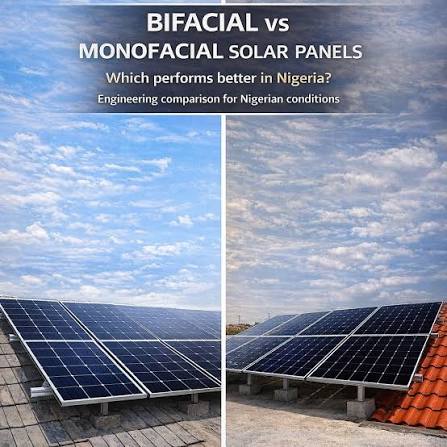
Bifacial Solar Panels vs. Traditional Panels: Which Performs Better In Nigeria?
Bifacial panels can produce more energy, but they do not magically double the electricity you get from a panel. The amount of extra power you get depends heavily on what is underneath the panel, how high it is installed, how much sunlight reaches the back and how reflective the surrounding surface is.
How Many Solar Panels Power a Fridge in Nigeria?
If your only objective is powering a fridge, your system requirements will be very different from someone who wants to run a refrigerator, freezer, television, fans, lights, Wi-Fi router and washing machine.
Ready to Go Solar?
Get a free, no-obligation solar quote today. Our team will design a solar system tailored to your home or business.